

An abandoned theater has a head start on most subjects. There are rows of seats, a stage, and possibly a hole in the roof providing better light than anyone could afford to install. You can stand in the aisle, point the camera forward, and come home with something impressive.
You can also come home with almost exactly the same photograph as the last person who stood there.
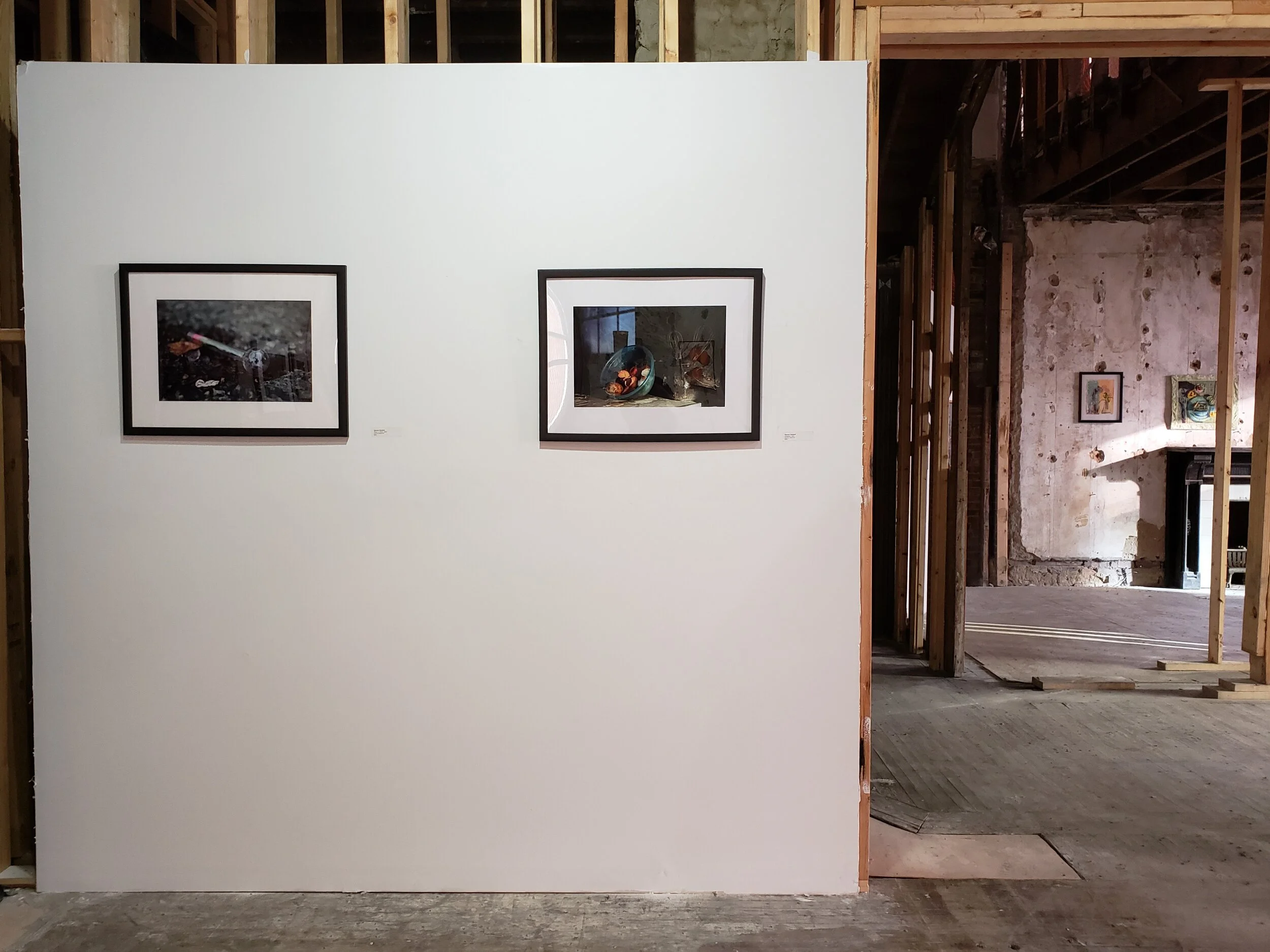
Installation view of Still: An Elaboration on the Inanimate, The Chateau Gallery, Louisville, 2021. TCG Gallery archive.
That familiar view may be worth making. The trouble comes when the location supplies everything and the photograph adds very little. Getting inside a building can take hours of research and effort. None of that effort is visible to someone looking at the finished picture. They get the frame you chose.
Consider what happens when you move away from the center aisle. Perhaps a repaired seat stands out among the broken ones. Perhaps the exit opens onto a perfectly ordinary parking lot. Including that parking lot might spoil the fantasy of a forgotten world. It might also make a more interesting photograph: this place is falling apart beside somewhere people still use every day.
Decay gets flattened into a mood remarkably easily. Desaturate the walls, deepen the shadows, give the image a mournful title, and a factory starts to resemble a hospital, which starts to resemble every other empty building. The details that distinguish them can disappear under the treatment.
Those details are often worth keeping. A patched window records an attempt to maintain a place. New wiring beside damaged plaster suggests it may still have a use. Before calling a building abandoned, find out whether it is. Its actual history may be more complicated than the picture initially suggests.
On the street, the same attention can turn an unpromising scene into a photograph. A shop closes, but the illuminated sign stays on. Its reflection falls across the shutters next door. Someone has left a delivery cart on the pavement. You could crop tightly around the sign and make a picture about color, or include the cart and the neighboring shop to show more of the working street. Neither choice needs an elaborate explanation. They give the viewer different things to look at.
This is also where a narrative can begin. We have a few details and an incomplete account of what happened. A caption can supply the location, the occasion, or something the photographer learned. It does not need to tell us that an empty street represents loneliness. We may see relief, boredom, or the welcome end of a long shift.
When editing, try looking at the photographs before reading their titles. Compare the wide view with the frame you made a few steps to the side. Look for the small distractions as well as the obvious subject. A bright window at the edge can pull attention away from the part you wanted us to notice. A sliver of the next room might be the reason to keep looking.
Sometimes the grand view wins. Sometimes it is the parking lot. Give both a chance before deciding which picture belongs in the exhibition.
TCG Gallery is accepting submissions for The Art of Street Photography, The Beauty in Decay, and The Narrative: Stories in a Single Frame. Find the prospectuses and deadlines on our Call for Entries page.