

On curatorial restraint, visual dissonance, and occasionally rejecting a photograph for being too damn good.
Short answer: An open theme may sound liberating, but our themeless calls have consistently attracted fewer submissions than our themed calls, and the resulting work is often more difficult to curate. TCG Gallery is discontinuing open-themed exhibitions.
An open-themed exhibition sounds wonderful in theory. Remove the restrictions, give photographers complete creative freedom, and see what arrives.
What could possibly go wrong?
At TCG Gallery, exhibitions such as The Captured Image (2022) and Themeless (2023) explored this proposition. Both brought together remarkably diverse photographic practices. The Captured Image presented 36 photographs by 36 artists without a common subject. These exhibitions also exposed some of the inherent difficulties of curating without a predetermined conceptual framework.
The problem is not necessarily finding good photographs. It is finding photographs that constitute an exhibition. Those are two entirely different things.
An exhibition is not a talent show
There is a prevailing assumption that a juried exhibition consists of selecting the strongest individual photographs from a submission pool.
If only it were that simple.
An exhibition is a collective composition. Every photograph alters the perceptual conditions of the photographs surrounding it. Visual correspondences develop through color, gesture, tonality, materiality, symbolism, and subject matter. An image acquires meaning through its position within a wider sequence.
Sometimes, the most individually impressive photograph in the entire submission pool is the wrong photograph for the exhibition.
Curator and writer David Campany has explored this distinction in his writing on photographic editing. The arrangement of photographs can produce meanings absent from the individual images themselves. Curation is therefore an interpretive act, not merely an exercise in ranking photographic competence.
Stealing the thunder
Occasionally, we encounter a photograph so visually commanding that its inclusion becomes a problem.
Imagine five beautifully restrained photographs establishing a delicate interplay of form and atmosphere. Introduce a technically spectacular, chromatically aggressive image into that sequence, and suddenly the other five become nearly invisible.
The image has stolen the thunder.
In certain circumstances, we reject exceptional work because its visual dominance compromises the integrity of an entire movement. Its presence would reduce several otherwise compelling photographs to supporting characters in somebody else's exhibition.
This is both a curatorial flex and damage control.
It is not about protecting weaker artists from stronger ones. It is about preserving the visual autonomy of every artist in the exhibition.
Sometimes, the exhibition improves when we take its best photograph out.
The tyranny of the greatest hits
Open-themed exhibitions encourage a particularly irritating submission strategy: the photographic equivalent of a greatest-hits album assembled by a confused record executive.
A landscape. A portrait. An architectural photograph.
Three perfectly competent images, three entirely different artistic sensibilities, and very little indication of what the photographer is actually interested in.
The problem is not versatility. It is the absence of discernible artistic intent.
A disciplined body of work does not require identical subject matter, a consistent color palette, or thirty variations of the same abandoned barn. It requires an underlying visual intelligence. There should be some continuity of observation, formal inquiry, conceptual preoccupation, or method.
Creative freedom is not an exemption from self-editing.
Photographers occasionally mistake an open theme for permission to throw shit at the wall and see what sticks.
The remarkably unsuccessful cash grab
We understand how an open-themed exhibition might appear from the outside. A gallery removes its submission criteria, casts the widest possible net, and presumably collects more entry fees.
Here is the inconvenient part: our open-themed exhibitions have consistently received fewer submissions than our themed exhibitions.
If this were a cash grab, it would be a remarkably incompetent one.
People work better when given a task. A meaningful prompt provides direction, generates curiosity, and encourages photographers to reconsider their existing portfolios or produce something entirely new.
An invitation to submit anything can be considerably less inspiring than an invitation to investigate something specific.
The strange exception: abstraction
Interestingly, The Abstract Image (2024) attracted a considerable number of submissions despite being relatively unrestricted in subject matter.
We do not know precisely why, but we have a theory.
Abstraction gives photographers a task without giving them a subject. Photograph whatever you want, but transform it into something that transcends its literal representation. Suddenly, there is a conceptual problem to solve.
Our exhibition Minimalism (2024) operated on a similar principle. Architecture, landscape, botanical subjects, and abstraction shared a formal vocabulary grounded in negative space, tonal restraint, proportion, and economy of composition.
Neither exhibition required thematic uniformity. Both required a degree of artistic discipline.
Perhaps photographers are more receptive to creative freedom when it comes with an intellectual proposition. An open theme asks what you have. Abstraction asks what you can do with it.
That distinction might explain considerably more than we initially realized.
Movements, dissonance, and the architecture of an exhibition
More recent exhibitions, such as The Surreal (2026), have allowed us to develop distinct curatorial movements.
Rather than presenting surreal photography as one enormous collection of strange things, the exhibition progresses through unstable environments, fragmented identities, domestic rituals, constructed realities, and the remnants of the dream.
These movements establish a visual syntax. They allow photographs to operate in counterpoint, introduce moments of tension, and create transitions between disparate artistic approaches.
Coherence does not mean that everything must be harmonious. Deliberate dissonance can be extraordinarily effective.
The distinction is whether the dissonance accomplishes something.
There is a considerable difference between an unexpected crescendo and somebody dropping a piano down the stairs.
Curatorial statements cannot perform miracles
One of the more dangerous habits in contemporary curatorial writing is the impulse to manufacture intellectual continuity where none exists.
We can describe an exhibition as a meditation on liminality, phenomenological displacement, and the contested ontology of the photographic image.
That sounds expensive.
It does not necessarily mean anything.
A curatorial statement should articulate relationships that exist within the work. It should not serve as an elaborate alibi for their absence.
No more open themes
At a certain point, open-themed exhibitions begin to feel like placeholders in an exhibition calendar.
They are awkward to promote, difficult to curate, and frequently lack a compelling intellectual premise beyond the fact that an exhibition is supposed to take place that month.
We have decided to discontinue them.
This does not mean that future TCG exhibitions will have rigid or narrowly prescriptive themes. Quite the opposite. We want ambitious concepts with enough interpretive latitude to accommodate unexpected work, unconventional photographic processes, and genuinely distinct artistic perspectives.
But there has to be a question worth answering.
Anyone can assemble a collection of beautiful images.
Making them belong together is the actual work.
Browse our current calls for entry and exhibition archive.
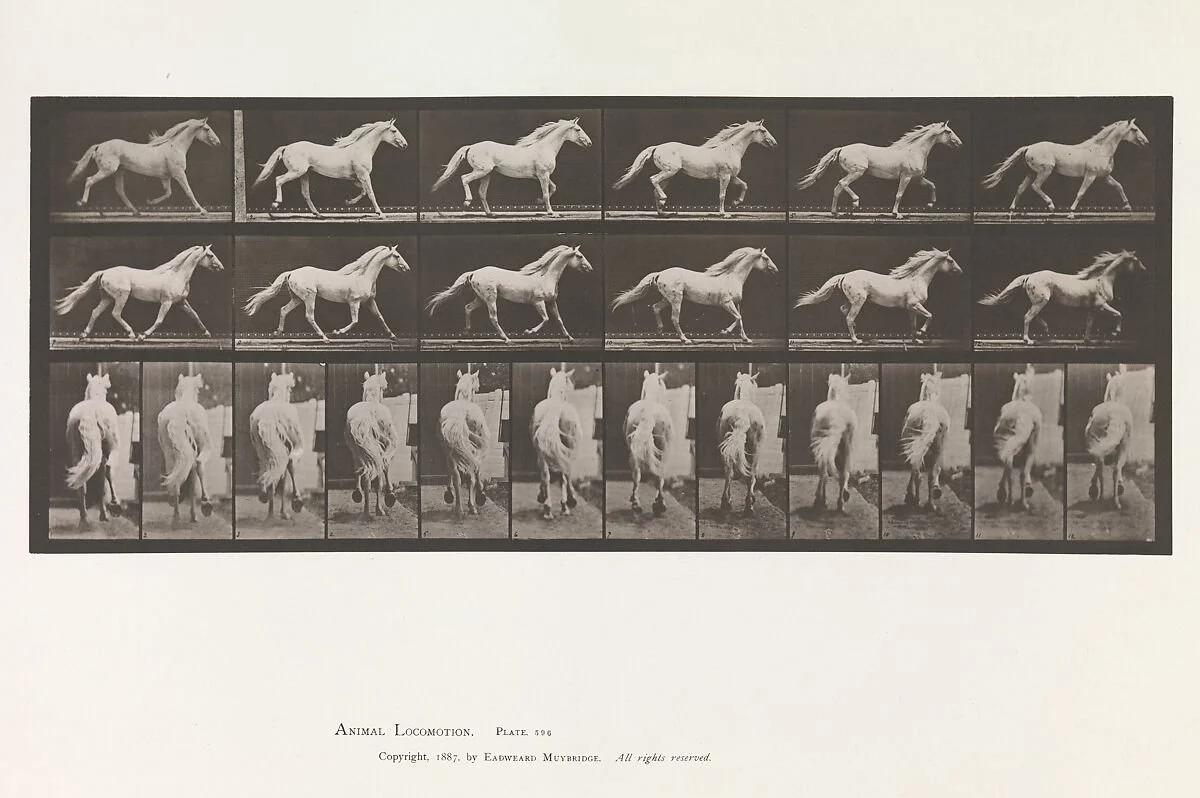
Image: Eadweard Muybridge, Animal Locomotion, Volume IX, Horses, plate 596 (1887). Photogravure. The Metropolitan Museum of Art, Rogers Fund, transferred from the Library (1991.1135.9). Public domain.